






Why Winter Suits Burgundy's Table
Burgundy is best known for wine, but its food is built for cold months. Between November and March the region's markets fill with strong washed-rind cheeses, cured hams and terrines, and restaurants lean on slow-cooked dishes such as boeuf bourguignon, coq au vin, oeufs en meurette (eggs poached in red wine sauce) and potée bourguignonne, a one-pot stew of pork, sausage, cabbage and root vegetables. Cheese and charcuterie sit at the centre of this way of eating: a board of both, a basket of bread and a glass of local wine is a normal winter lunch or aperitif.
This guide covers what to look for, where to buy it and how locals eat it, with a focus on Dijon, the Côte de Nuits, and the Yonne around Auxerre and Chablis.
The Cheeses to Know
Époisses is the region's headline cheese. It is a cow's milk cheese with an orange, sticky rind that is washed during ripening, finishing with marc de Bourgogne, the local grape-pomace brandy. It has protected AOP status and takes its name from the village of Époisses in the Côte-d'Or. The smell is strong, the inside soft and creamy when ripe; many people eat it with a spoon once it has warmed to room temperature.
Ami du Chambertin is a close relative made by the Gaugry dairy in Brochon, near Gevrey-Chambertin. The name comes from the Chambertin winemakers who adopted it as a partner for their wines. It is a little milder and firmer than Époisses.
Soumaintrain comes from the Yonne and has IGP protection. It is another washed-rind cow's milk cheese, softer in flavour than Époisses and a good starting point if you are new to this style.
Chaource is a white bloomy-rind cheese from the border of the Aube and the Yonne. It is creamy under the rind and slightly crumbly at the centre, with a fresh, lactic taste that balances the stronger cheeses on a board.
Cîteaux is made in small quantities by the monks of the Abbaye de Cîteaux, south of Dijon. It is a semi-soft, mild washed-rind cheese, and it is not always easy to find outside the abbey's own shop and a few specialist cheesemongers.
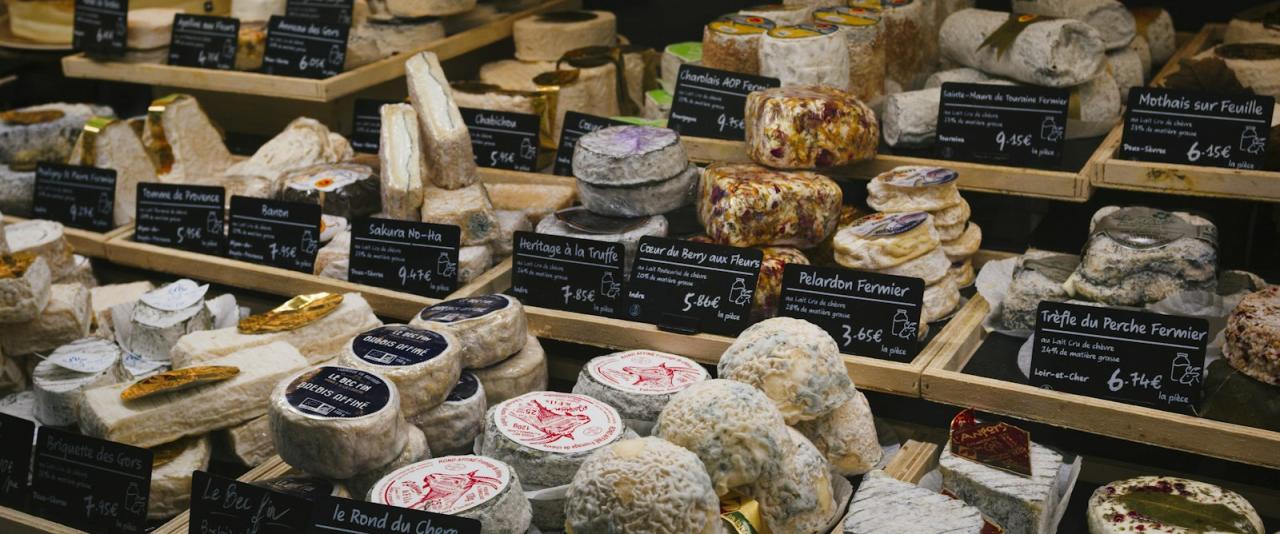
Goat cheeses from the south of the region, including Charolais (AOP), round out a board, though fresh goat cheese is more of a spring and summer product.
Charcuterie Specialities
Jambon persillé is the classic Burgundian terrine: chunks of cooked pork set in a parsley-and-garlic jelly, sliced cold and served with a little mustard. It was traditionally an Easter dish but is now sold year-round by most charcuteries. Strictly speaking it is often made from shoulder rather than ham, so you may see it labelled persillé de Bourgogne.
Jambon du Morvan is a raw, air-dried ham from the Morvan hills in the west of the region. The Morvan also produces dry sausages such as rosette du Morvan.
Andouillette de Chablis is a coarse tripe sausage, grilled or cooked in white wine and served with mustard. It is an acquired taste with a strong smell, and Chablis butchers take it seriously; the AAAAA label you may see on menus is awarded by an association of andouillette enthusiasts.
Look also for terrines and pâtés en croûte at charcuterie counters, and for gougères, the small cheese choux puffs served with an aperitif across Burgundy.
Where to Buy
In Dijon, Les Halles, the covered market a short walk from the Palais des Ducs, is the easiest place to compare cheese and charcuterie stalls. It is open on Tuesday, Thursday, Friday and Saturday mornings; on Tuesday, Friday and Saturday traders also set up in the surrounding streets, while Thursday is indoor only. Arrive before 11am for the best choice.
The Gaugry dairy in Brochon has suspended visits and tastings during building work, which is expected to last until the end of 2027, but a temporary shop in the village stays open from Tuesday to Saturday.
In the Yonne, the Saturday markets and specialist shops in Auxerre and the butchers of Chablis are reliable sources of andouillette and local cheeses. Village markets across the region usually run one morning a week; ask at the local tourist office for the day.
How Locals Eat It
A Burgundian cheese board usually comes after the main course and before dessert. Two or three cheeses are enough: one washed rind such as Époisses, one milder such as Chaource or Cîteaux, and perhaps a goat cheese. Leave strong cheeses out of the fridge for an hour before serving, and keep Époisses in its wooden box so it does not run.
Charcuterie tends to appear at the start of a meal or as an aperitif with gougères and a glass of white wine. Jambon persillé is a common starter in bistros, served with cornichons and toasted bread.
What to Drink With It
Local pairings are the easiest. Chablis or a Bourgogne Aligoté works well with jambon persillé, gougères and Chaource. Époisses is often paired with a red from the Côte de Nuits or, more traditionally, with a white, since strong washed-rind cheeses can overpower lighter reds. A glass of marc de Bourgogne after the meal is the old-fashioned digestif. If you are driving between villages, a fruit juice from local producers or a kir made with crème de cassis from Dijon makes a lighter alternative.
Practical Tips
Most cheesemongers will vacuum-pack cheese for travel if asked. Within the EU you can carry cheese and charcuterie freely; travellers to the UK, US and other countries should check current import rules for meat and dairy before buying. Many smaller shops close for lunch, roughly 12:30 to 2pm or 3pm, and often on Sunday afternoon and Monday, so plan purchases for the morning.