







Cloître des Cordeliers
14th-century monastery with 20m deep limestone wine cellars
- Hours
- Open daily except January, February, March, November, and December; multiple daily session...
- Where
- Saint-emilion, Aquitaine
- Directions
- Directions
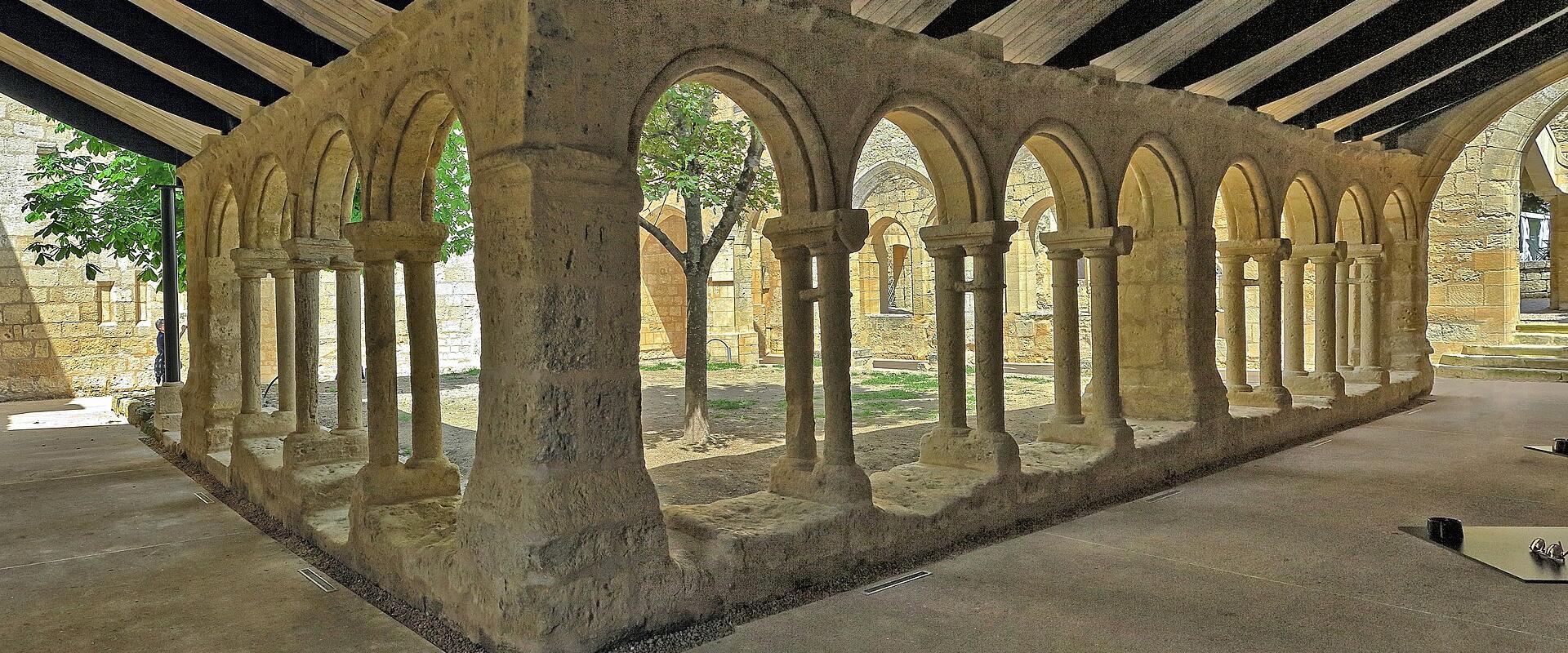
The Cloître des Cordeliers is one of the quieter and more atmospheric sights of Saint-Émilion, a ruined Franciscan cloister on a lane at the edge of the medieval centre, with a garden of ivy, roses and stone arches and a long series of cellars cut deep into the limestone below. Saint-Émilion is a village of golden stone built on a hill above the Dordogne valley, a wine capital of the Bordeaux region, and the whole town and its vineyards are listed by UNESCO as a cultural landscape. The cloister is a place where the monastic past and the wine culture meet.
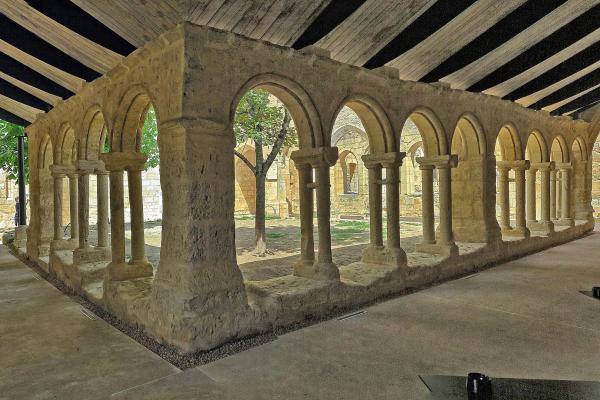
The Franciscans, called Cordeliers in France because of the knotted cord they wore as a belt, came to Saint-Émilion in the thirteenth century, soon after the order was founded, and built a convent and cloister that were enlarged in the fourteenth century. The Gothic arches of the cloister, with their slender columns and carved capitals, still stand around a garden, and parts of the church wall rise above it, open to the sky. The convent suffered during the Hundred Years' War and the Wars of Religion and was damaged in the Revolution, and it is its ruined state that gives the place its romantic character. The monks quarried the limestone beneath the hill for stone, leaving large galleries below ground.
Those galleries now serve a different purpose. The limestone cellars beneath the cloister form a network of tunnels, some twenty metres below the surface, where the temperature and humidity stay constant through the year, which makes them ideal for storing wine. Since the end of the nineteenth century they have been used to mature sparkling wine, and the Cordeliers cellars are well known for the production of Crémant de Bordeaux, made by the traditional method with a second fermentation in the bottle. Visitors can tour the cellars, seeing the stacked bottles and the chalky walls, and taste the wine at the end. Tours may include the cloister and its garden, and some use a small electric vehicle to move through the passages.
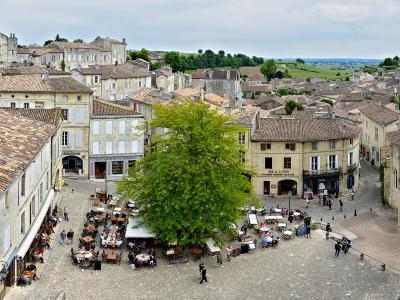
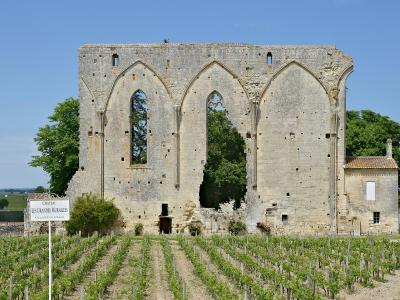
Saint-Émilion has much more to offer. The Église Monolithe, a church carved out of a single mass of limestone in the twelfth century, is the most famous monument, with a bell tower that rises above the town, and the Tour du Roy, a thirteenth-century keep, gives views over the roofs and vineyards. The town is named after Émilion, a Breton monk of the eighth century who settled in a cave here, and the hermitage is visited by pilgrims. The Grands Crus vineyards, such as Château Figeac and others, surround the town, and many offer tastings. Saint-Émilion's macarons, made to a recipe attributed to the Ursuline nuns, are a local sweet. The Dordogne valley below has walking and cycling.
The cloister suits wine lovers, history enthusiasts and those who enjoy atmospheric ruins. Allow about an hour. Opening periods vary through the year, with seasonal closures in winter, so check before travelling and book the cellar tour if possible. Steep, cobbled streets require comfortable shoes, and the cellars are cool, so bring a layer.
Categories
More photos coming soon
Opening Hours
- Open
- Open daily except January, February, March, November, and December; multiple daily sessions
Hours and prices change, especially out of season. Check with the venue before you go.
Nearby Attractions
Other places to visit in Saint-emilion
Monolithic Church of Saint-Émilion
12th-century monolithic church carved from rock
Churches · Heritage Trails
Vineyards of Saint-Émilion
UNESCO-listed medieval town and renowned Bordeaux wine re...
From €10 Food & Wine · Guided Experiences
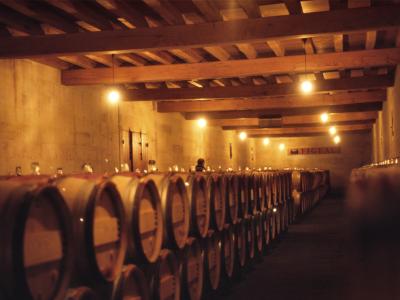
Château de Figeac
1st Growth Saint-Émilion estate with quartz terroir
Food & Wine · Historic Architecture
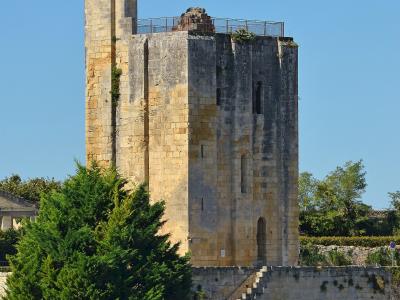
Tour du Roy
19th-century Crémant caves beneath historic tower
Guided Tours · Towers
Questions people ask
Quick Facts
Best Time to Visit
Early June to late September offers warm weather and ideal conditions for vineyard exploration and wine tasting.