







- Where
- Besancon, Franche-Comté
- Directions
- Directions
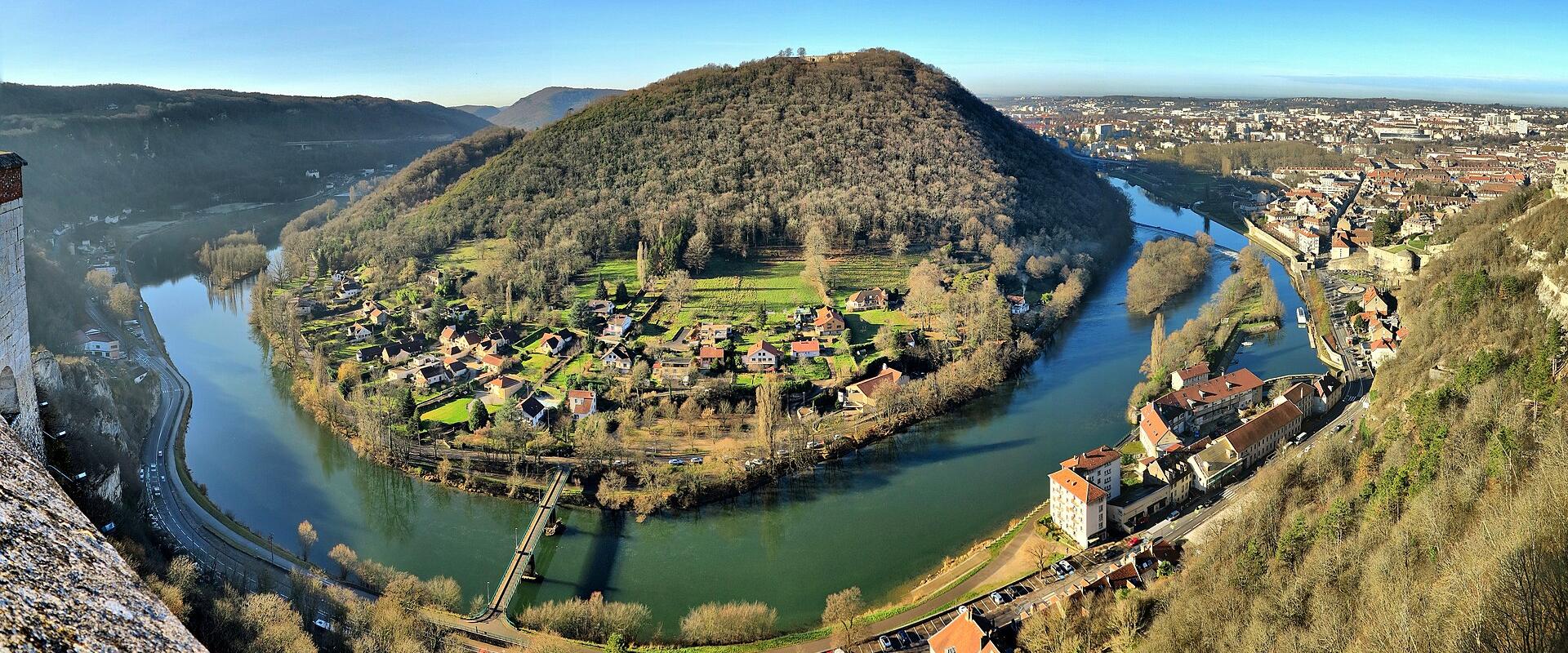
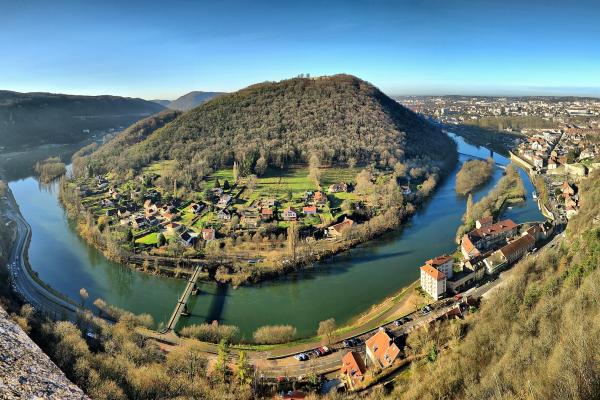
La Boucle, the loop, is the name Besançon gives to its historic centre, which sits inside a tight meander of the river Doubs. The river flows in from the east, curls round in a horseshoe and runs back out, enclosing an almost circular peninsula with a single narrow neck of land, and at that neck the rocky hill of the citadel rises like a stopper. The geography explains why the town was built here and why it was almost impossible to take. Until the second half of the nineteenth century this peninsula held nearly the whole town, which then spread to the surrounding plains, and today the Boucle remains the commercial and cultural centre, with around ten thousand residents.
The river and its bridges frame the walk. Along the quays, the Quai Vauban and the Quai de Strasbourg run beside the water, lined with plane trees and old houses, and the stone walls and bastions of the old fortifications rise above them. The Pont Battant, the oldest bridge, leads into the main street, the Grande Rue, and the Pont de la République and the Pont Canot connect other parts of the loop. At the base of the citadel hill, the Tour de la Pelote, a round tower from the sixteenth century, and the gate known as the Porte Rivotte belong to the defences, which were remodelled by Vauban after Louis XIV took the town in 1674. These works, together with the Citadelle, form a group that was inscribed on the UNESCO World Heritage List in 2008 as part of the fortifications of Vauban.
Inside the loop, the town has about a hundred buildings of note, mostly in a calm, golden limestone. The Roman Porte Noire, a triumphal arch beside the cathedral, a theatre from antiquity, the Renaissance Palais Granvelle, the Place de la Révolution, with the Théâtre and the Musée des Beaux-Arts, and a series of squares with fountains reflect the long history of the place. The narrow lanes, often called ruelles, run between tall houses, and passages lead to courtyards.
Besançon is famous for watchmaking. The industry took root in the town in the eighteenth century, when Swiss watchmakers settled here, and for a long time Besançon produced most of the watches made in France. The Musée du Temps in the Palais Granvelle and the Musée de la Montre et de l'Horlogerie Franc-Comtoise explain the story, and the craft is recognised as part of the intangible heritage of the town. The city also has a literary and scientific heritage, as the novelist Victor Hugo was born here in 1802, and Auguste and Louis Lumière, the inventors of the cinematograph, were born in Besançon in 1862 and 1864.
The Boucle can be explored freely, on foot, with no tickets, and a boat trip on the river gives another perspective on the walls. A walk around the quays takes about an hour, and the Marché des Capucins, the covered market, and the Place de la Libération are other places to stop. The area suits walkers, photographers and anyone curious about the way geography shapes a town.
More photos coming soon
Nearby Attractions
Other places to visit in Besancon
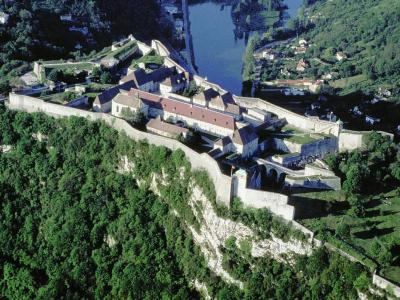
La Citadelle de Besançon
Vauban star fort overlooking the Doubs river
Fortresses · Heritage Trails
Le Vieux Besançon (Old Town)
Best-preserved historic city in a river loop
City Centers · Heritage Trails
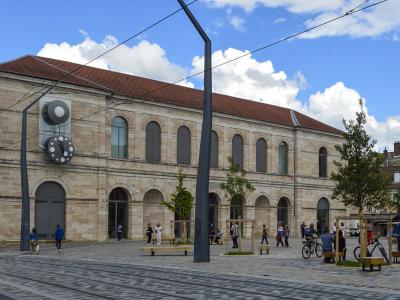
Musée des Beaux-Arts et d'Archéologie de Besançon
France's oldest public art collection, founded 1694
Museums & Culture
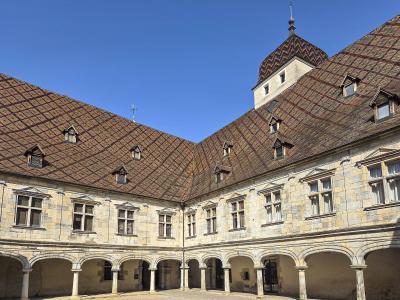
Musée de la Montre et de l'Horlogerie Franc-Comtoise
Granvelle Palace housing 1,500 timepieces
Museums & Culture
Questions people ask
Quick Facts
Best Time to Visit
Late June to early September offers warm weather and ideal conditions for outdoor activities and sightseeing.