







- Where
- Besancon, Franche-Comté
- Directions
- Directions
Roman Besançon was called Vesontio, and it was an important city of Gaul long before the Romans arrived. Julius Caesar described it in his account of the Gallic War in the first century BC, noting how nature had made it almost impregnable: the river Doubs makes a tight loop around the rock on which the town stands, leaving only a narrow neck of land to defend, and this natural fortress later carried the citadel built by Vauban in the seventeenth century, which is now listed by UNESCO. When the Romans took control, they turned Vesontio into a major regional centre, and the remains of their buildings can still be found in the old town.
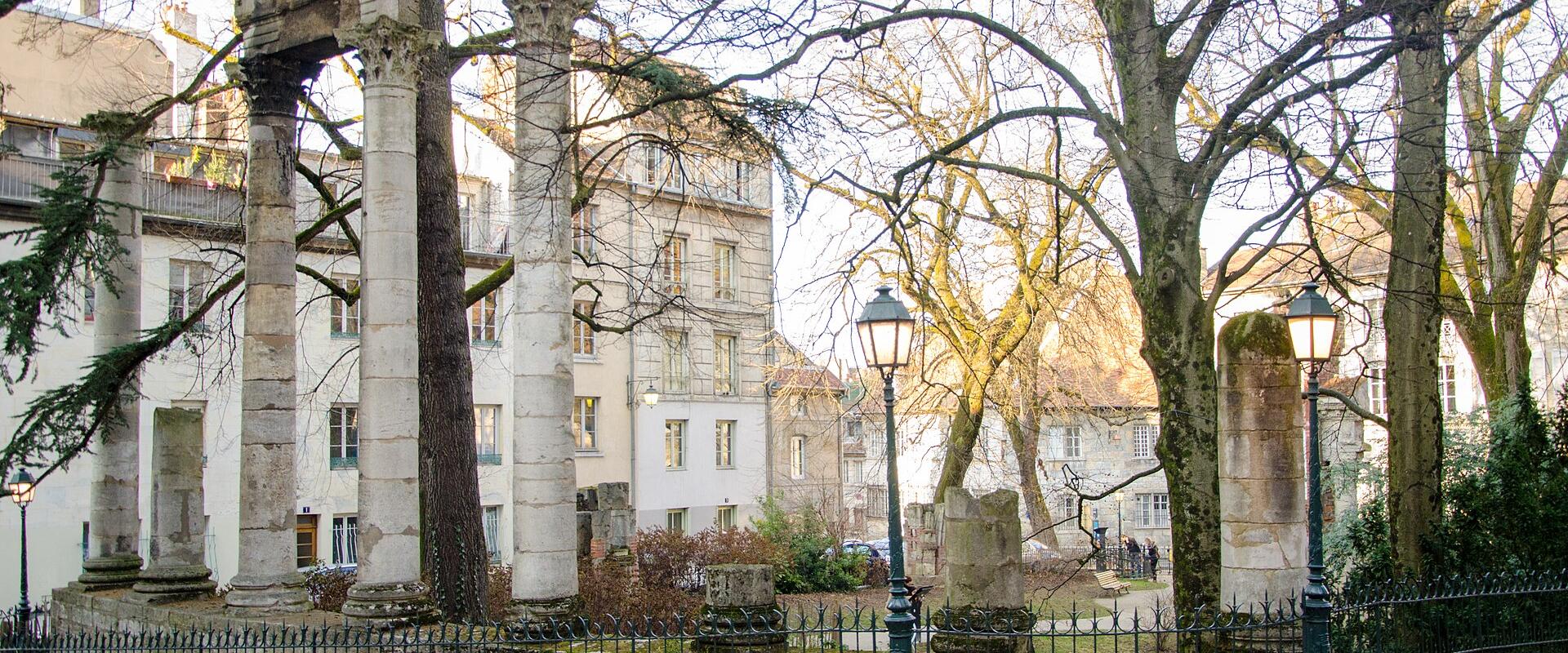
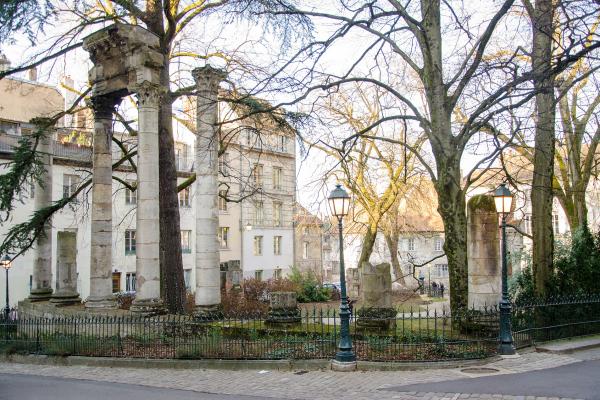
The most imposing survivor is the Porte Noire, the Black Gate, a triumphal arch of the second century, carved with figures and decoration and darkened by the centuries, which stands near the cathedral. The Roman theatre, whose remains lie in the Square Castan, the garden behind the Place de la Révolution, was a large building that once held thousands of spectators, with a semicircular auditorium built on the slope, and the foundations and some seating survive, along with fragments of a nymphaeum and of the aqueduct that brought water to the city. Details about the exact scale and condition of these remains differ between sources, and some descriptions refer to an amphitheatre, so visitors should ask at the tourist office or the Musée des Beaux-Arts et d'Archéologie about what can currently be seen and when.
The archaeological museum, in the Musée des Beaux-Arts et d'Archéologie, is a first-rate collection that includes mosaics and sculptures from the Roman period, and it provides context for the sites in the town. The city has many other attractions. The Citadelle de Besançon, high on its rock above the loop of the river, houses museums and a zoo and offers sweeping views. The Cathédrale Saint-Jean-Baptiste has an astronomical clock of great complexity, and the Musée Comtois and the Musée de la Montre et de l'Horlogerie Franc-Comtoise recall the town's tradition of watchmaking, for which it became famous in the nineteenth century. The writer Victor Hugo was born in Besançon in 1802, and the Lumière brothers, pioneers of cinema, grew up in the town.
The Vieux Besançon, the old town, has narrow streets, courtyards and fountains, and the Marché des Capucins, the Place de la Libération and the banks of the Doubs invite strolling. Boat trips run on the river around the loop, passing beneath the citadel.
The remains suit archaeology fans and history lovers. Allow an hour, more if you add the museum. Check what is open and accessible before you go.
Categories
More photos coming soon
Nearby Attractions
Other places to visit in Besancon
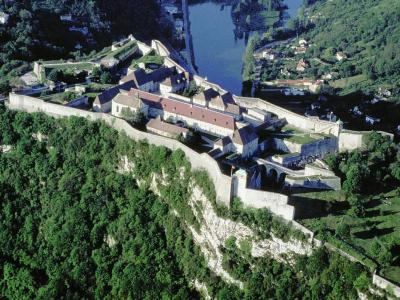
La Citadelle de Besançon
Vauban star fort overlooking the Doubs river
Fortresses · Heritage Trails
Le Vieux Besançon (Old Town)
Best-preserved historic city in a river loop
City Centers · Heritage Trails
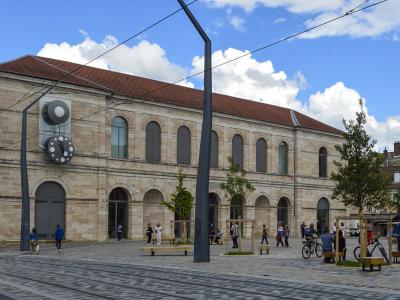
Musée des Beaux-Arts et d'Archéologie de Besançon
France's oldest public art collection, founded 1694
Museums & Culture
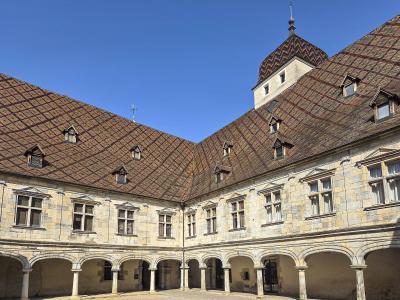
Musée de la Montre et de l'Horlogerie Franc-Comtoise
Granvelle Palace housing 1,500 timepieces
Museums & Culture
Questions people ask
Quick Facts
Best Time to Visit
Late June to early September offers warm weather and ideal conditions for outdoor activities and sightseeing.