


Why Walk Dijon
Dijon's historic centre is compact, largely pedestrianised and full of the buildings left by the Dukes of Burgundy, who made the city one of the richest courts in Europe in the 14th and 15th centuries. In 2015 the centre was included in the UNESCO World Heritage listing of the Climats of Burgundy, recognised as the political and commercial hub that shaped the region's wine landscape. You can see the main sights in half a day on foot, and a full day lets you add museums, a tower climb and a long lunch.
The walk below follows the general direction of the city's own self-guided route, the Parcours de la Chouette (Owl Trail), and adds a few stops along the way.
The Owl Trail
The Owl Trail is a signposted circuit of 22 numbered stops through the old town, marked by small brass owl plaques set into the pavement. It is roughly two kilometres long and takes about an hour to walk without stopping, longer with visits. The tourist office sells an inexpensive booklet explaining each stop, and it is also available in an app. The route is named after the small carved owl on the outside wall of the Église Notre-Dame, a local good-luck charm.
Start: Place Darcy to Rue de la Liberté
Begin at Place Darcy, about ten minutes' walk from Dijon-Ville station, where the Porte Guillaume, an 18th-century triumphal arch, marks the entrance to the old town. From here, Rue de la Liberté runs east as the main shopping street. Along it you will find the Maille boutique, the historic mustard shop where you can taste mustards and buy pots filled from the pump. Edmond Fallot, a family mustard maker based in Beaune, also has a shop in the city centre.
The Heart of the Ducal City
Rue de la Liberté leads to Place de la Libération, a graceful semicircular square laid out in the late 17th century by Jules Hardouin-Mansart, architect of Versailles. Behind it stands the Palais des Ducs et des États de Bourgogne, now the city hall and the Musée des Beaux-Arts. Entry to the museum's permanent collection is free, and its highlight is the Salle des Gardes with the elaborately carved tombs of Philip the Bold and John the Fearless.
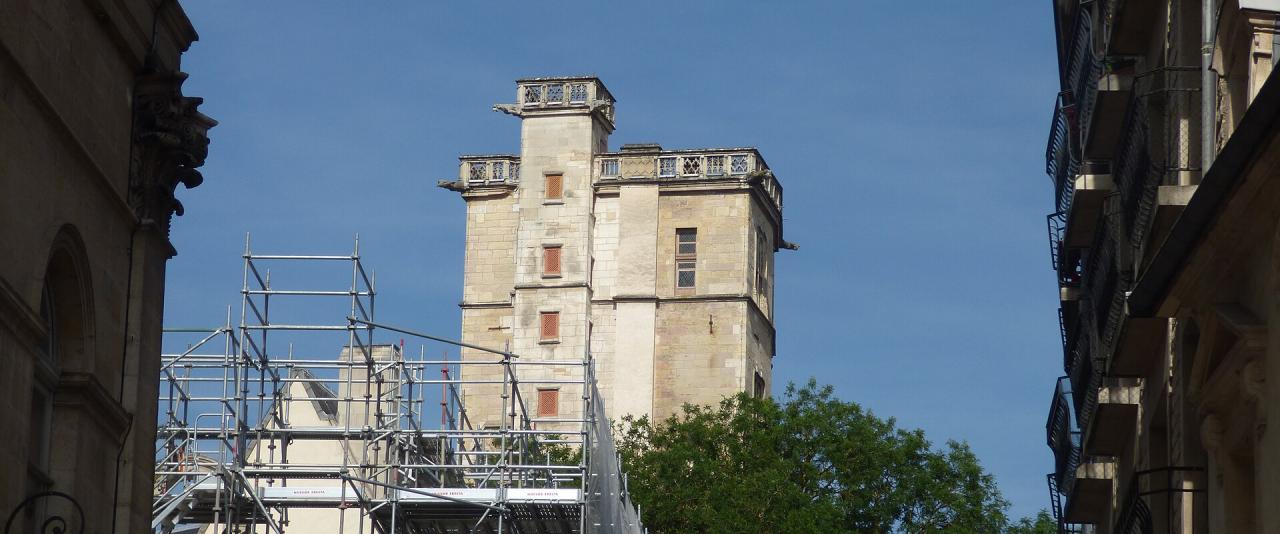
Next to the palace, the Tour Philippe le Bon rises 46 metres. Climbing its 316 steps gives a panoramic view over the roofs to the vineyards of the Côte de Nuits on a clear day. Access is by guided visit in small groups, so book at the tourist office, especially in summer.
Notre-Dame and the Owl
Walk north to the Église Notre-Dame, a 13th-century Gothic church with a façade lined with rows of gargoyles. On top sits the Jacquemart, a clock with automaton figures that strike the hours. Go around the left side of the church onto Rue de la Chouette to find the small worn stone owl. Tradition says you should stroke it with your left hand and make a wish; it has been rubbed so often that its features are almost gone.
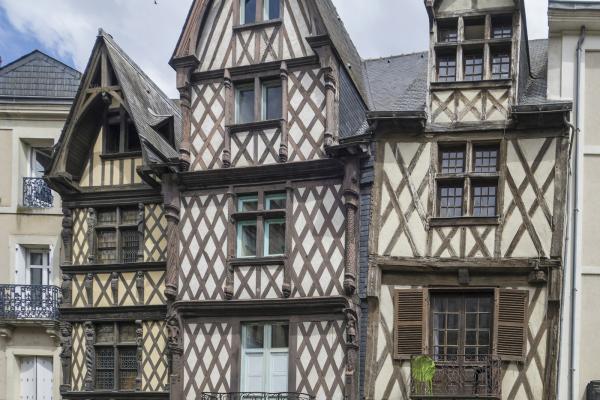
Across the street, the Maison Millière is a well-preserved half-timbered house from the late 15th century. Continue along Rue Verrerie, one of the best streets in Dijon for timber-framed houses, and Rue des Forges, where the Hôtel Chambellan has a Gothic courtyard with a spiral staircase that you can usually step into.
Markets, Mustard and Food
From Rue des Forges it is a short walk to Place François Rude, with its statue of a grape-treading winemaker, and then to Les Halles, the 19th-century covered market. Market days are Tuesday, Thursday, Friday and Saturday mornings, with Thursday limited to the indoor hall. It is the place to try local cheeses, jambon persillé and gingerbread (pain d'épices), another Dijon speciality.
If you have more time, the Cité internationale de la gastronomie et du vin, opened in 2022 in the former general hospital south of the centre, has exhibitions on French food and Burgundy wine, shops and restaurants, and can be reached on foot in about 15 minutes from the old town.
Practical Tips
- Time needed: two to three hours for the walk alone, a full day with the museum, tower and market.
- Accessibility: the centre is flat and pedestrianised, suitable for strollers and wheelchairs, though some side streets are cobbled.
- Best days: visit on a market morning (Tuesday, Friday or Saturday) to see the old town at its busiest.
- Closures: check museum opening days before you go; many French museums close one day a week.
- Getting there: direct high-speed trains from Paris Gare de Lyon take around an hour and a half to Dijon-Ville.