
Auxerre's Timber-Framed Old Town
Auxerre, the main town of the Yonne in northern Burgundy, rises from the left bank of the river in a jumble of steep streets, church towers and colourful timber-framed houses. The oldest surviving half-timbered houses date from the 15th century, and many more were built in the 16th and 17th centuries, when the town prospered from wine and river trade. Today they line the streets between the cathedral, the clock tower and the old boatmen's quarter, making Auxerre one of the best places in Burgundy to see this style of building.
How the Houses Were Built
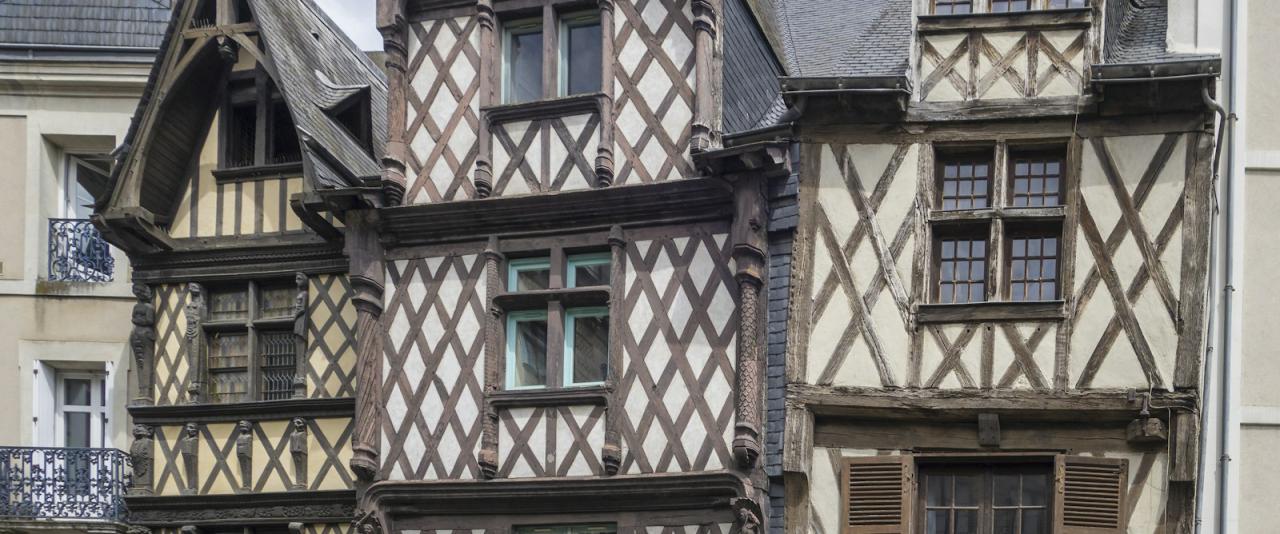
A half-timbered house (maison à pans de bois or maison à colombages) has a load-bearing frame of oak posts and beams, with the gaps filled by lighter materials such as wattle and daub, rubble or brick, then plastered. Upper storeys often project over the street on corbels, which gave more floor space on narrow plots and protected the lower walls from rain. Carved beams, brackets and corner posts showed off the owner's wealth.
Over the 18th and 19th centuries many timber facades in French towns were covered with plaster to look like stone, which was more fashionable. In the 20th century, restoration uncovered and repaired many of them, which is why the frames in Auxerre now stand out clearly, often painted in contrasting colours.
The Best Streets and Squares
The finest houses are concentrated in a small area, so you can see them in an hour or two.
Rue Fécauderie and Rue de l'Horloge are the heart of it. Rue Fécauderie has some of the most elaborately carved facades in the town, including a much-photographed corner house with sculpted beams. Rue de l'Horloge leads to the Tour de l'Horloge, the 15th-century clock tower that straddles the street. Its clock face shows the movement of the sun and moon, and the tower once marked the boundary between the upper and lower town.
Place de l'Hôtel de Ville and the streets around it have several fine houses, and the tourist office is at number 7, a convenient starting point.
Place Saint-Nicolas, in the Quartier de la Marine near the river, is the old district of the boatmen who floated wood and wine down the Yonne to Paris. Its small square and lanes have a quieter, village-like feel, with houses that are simpler but just as old.
Place Charles-Surugue and Place Robillard in the centre also have good groups of timber-framed buildings and are pleasant places to stop for a coffee.
Following the Cadet Roussel Trail
The simplest way to see the old town is the signposted walking circuit marked by bronze plaques set into the pavement. It is around 5 kilometres long and takes in the main monuments and the best-preserved houses. The trail is named after Cadet Roussel, a local character made famous by a popular 18th-century song; a statue of him stands in the town. The tourist office provides a map, and also runs guided themed visits, including tours focused on the town's most beautiful houses.
Churches and Museums Along the Way
The walk passes two major religious buildings worth going inside:
- Cathédrale Saint-Étienne, a Gothic cathedral with fine medieval stained glass. Its Romanesque crypt contains a rare 11th-century fresco of Christ on horseback.
- Abbaye Saint-Germain, a former abbey whose crypts hold Carolingian wall paintings from the 9th century, among the oldest in France. The abbey also houses the town's museum of art and history.
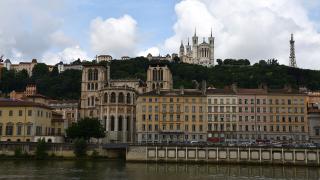
From the bridges over the Yonne, especially the Pont Paul-Bert, you get the classic view of the town: the cathedral, the abbey church tower and the rooftops stacked up the hillside. It is especially good in the late afternoon light.
Practical Information
- Getting there: trains from Paris Bercy reach Auxerre in about two hours. By car, Auxerre is just off the A6 motorway.
- Time needed: half a day for the old town and the timber-framed houses; a full day with the cathedral, abbey and museum.
- Terrain: the old town is on a slope, with some steep streets and uneven paving. Wear comfortable shoes.
- When to go: spring to autumn is ideal, but the houses can be seen at any time of year. Markets bring the centre to life on market mornings.
- Nearby: Chablis and its vineyards are about 20 kilometres east, making an easy half-day trip, and the Canal du Nivernais begins at Auxerre for walks or cycling along the towpath.