Start With Your Feet
Most visitors to France walk far more than they expect. Paris, Lyon and the old centres of towns such as Bordeaux, Avignon or Dijon are best seen on foot, and many streets are cobbled or paved with uneven stone. Pack one pair of comfortable, broken-in walking shoes that also look presentable, and a second pair in case the first gets wet. Sandals work in summer in the south, but less well on cobbles or long museum days.
Plan for stairs as well. Many metro stations in Paris have no lifts, and older hotels may have narrow staircases and small lifts. A suitcase you can carry up a flight of stairs is worth more than an extra outfit.
Clothing by Season and Region
France's climate varies a lot. Paris and the north can be grey and showery in any month, so a light waterproof jacket or compact umbrella is useful year-round. Winters in the north and in the mountains are cold; summers in the Mediterranean south and inland Provence are hot, often above 30°C in July and August. The Alps and Pyrenees can be cool in the evenings even in midsummer.
Layers solve most of this: a few tops that mix and match, a light jumper or fleece, and a jacket. French city dress tends to be neat rather than formal. Dark jeans or trousers, plain tops and a jacket fit in almost everywhere, from a café to a mid-range restaurant. Athletic wear is fine for actual exercise but stands out in city restaurants in the evening.
Churches and Religious Sites
Cathedrals and churches in France are active places of worship as well as monuments. There is no single national dress code, but covering shoulders and avoiding very short shorts or beachwear is the respectful norm, and some sites, including Lourdes' sanctuaries, ask visitors to dress modestly. Men should remove hats inside. A light scarf or shirt in your day bag covers you if you decide to go in on a hot day.
Keep your voice down, avoid walking around during Mass, and check whether photography is allowed; flash is often banned. Large churches such as Notre-Dame de Paris have visiting arrangements that differ during services, so check the official site before you go.
Swimming Pools and Beaches
French public swimming pools have a well-known rule that surprises visitors: men usually must wear close-fitting swim trunks or briefs, not loose board shorts, for hygiene reasons. Some pools also require swim caps. If you plan to use a municipal pool or a hotel pool with similar rules, pack the right swimwear. At the beach, swimwear belongs on the beach: put a shirt and shorts on before walking into town or into a shop or café, and some seaside towns enforce this with local bylaws.
Practical Items Worth Packing
- A plug adapter for type C/E sockets; France uses 230V, 50Hz.
- A small day bag that closes properly. Pickpocketing is common in busy tourist areas and on public transport in large cities, so keep your phone and wallet zipped away.
- A refillable water bottle. Tap water is safe to drink, and many cities have public drinking fountains.
- Copies of your passport and any travel insurance details, stored separately or on your phone.
- Any prescription medicines in their original packaging, with a copy of the prescription.
Everyday Etiquette
The most useful habit is greeting people. Say "Bonjour" (or "Bonsoir" in the evening) when you walk into a shop, bakery, pharmacy or small restaurant, and "Merci, au revoir" when you leave. Starting a conversation with a question and no greeting comes across as rude, and a greeting alone often changes the tone of the whole exchange.
Use "Monsieur" or "Madame" with people you don't know, and "vous" rather than "tu". A few words of French are appreciated even if the conversation then switches to English.
At the Table
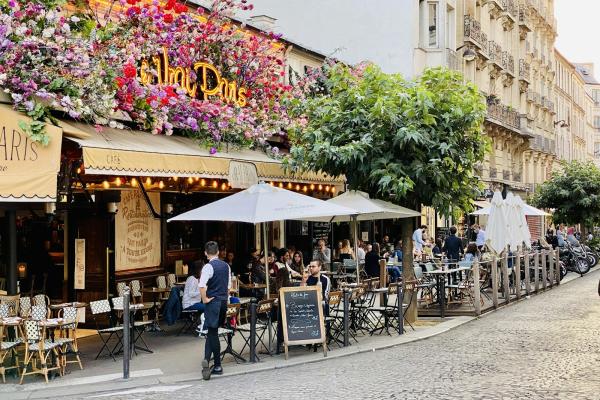
In restaurants, wait to be seated or ask for a table rather than sitting anywhere, except at casual cafés. Service is included in the price by law, so tipping is not expected; rounding up or leaving a few euros for good service is a kind gesture, not an obligation. The bill will not arrive until you ask for it ("L'addition, s'il vous plaît"), because rushing guests out is considered impolite.
Keep your hands on the table rather than in your lap, bread usually sits on the tablecloth beside your plate, and it is fine to ask for a free jug of tap water ("une carafe d'eau"). Lunch is often the main meal of the day, and many restaurants outside big cities serve lunch only from about noon to 2pm, so plan ahead if you are travelling in rural areas.