







- Where
- Rouen, Normandy
- Directions
- Directions
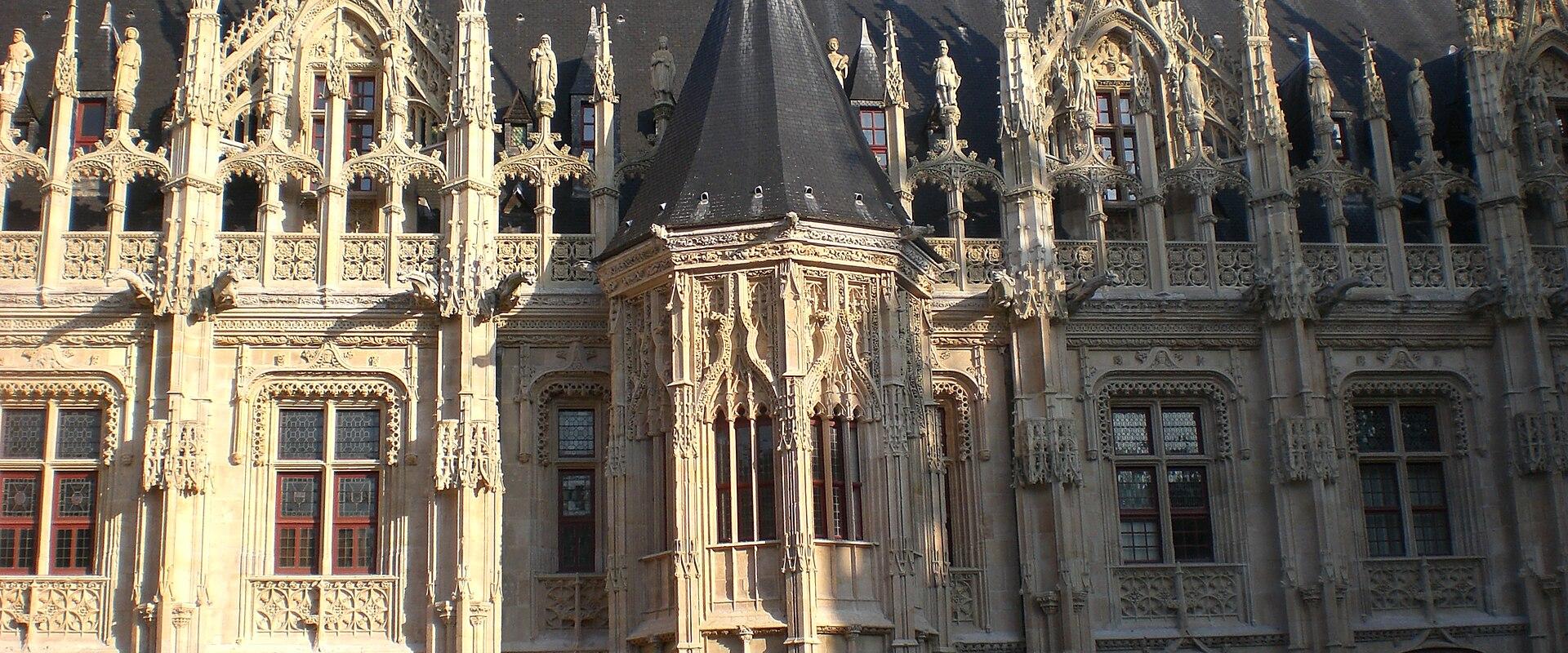
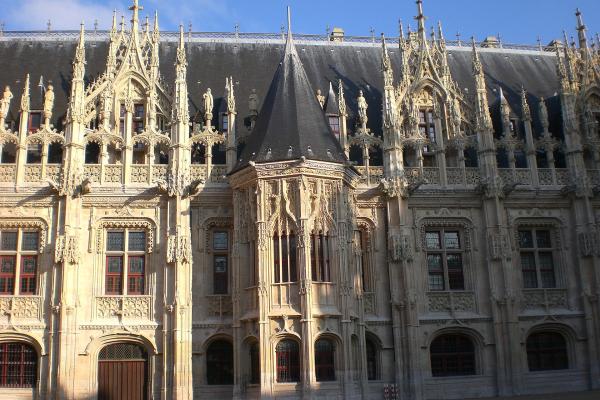
The Palais de Justice of Rouen is one of the finest civil buildings of the late Gothic period in France, a long, richly carved facade of pale stone decorated with pinnacles, gables, turrets and lacework tracery, facing a broad courtyard in the centre of the old town. Visitors who see it for the first time often take it for a church or a town hall, because its decoration is so elaborate. It was built to house the Échiquier, the supreme court of the duchy of Normandy, and it later became the seat of the Parlement of Normandy, the provincial high court of the kingdom, which gave the city a role as a centre of legal and political power.
Construction began at the end of the fifteenth century, around 1499, under Louis XII, and the main buildings were completed in the early sixteenth century. The design combines the Flamboyant Gothic style with early touches of the Renaissance, and the result is a building that looks backward and forward at once. The west wing, with its central staircase tower and its steep, decorated roof, is the best-known part. Inside, the great Salle des Procureurs, the hall where lawyers and their clients met, has a wooden ceiling in the shape of an inverted ship's hull, a design common in Norman carpentry, and it shows the skill of the craftsmen of the time.
The building has had a dramatic history. During the Second World War, in 1944, the Allied bombing of Rouen caused severe damage to the centre of the city, and the Palais de Justice was badly hit. It was rebuilt in the following decades, with the facade restored as faithfully as possible, and traces of the damage can still be seen on some of the stone. The building continues to serve as the courthouse of the city, so access to the interior is limited, and visitors mainly enjoy the facade and the courtyard from the street.
Beneath the courtyard lies one of the most remarkable discoveries of recent decades. In the 1970s, archaeologists working at the site uncovered the remains of a medieval Jewish building from the twelfth century, known as the Maison Sublime or the Monument Juif, evidence of the large and flourishing Jewish community that lived in Rouen before the expulsion of the Jews from France in the late Middle Ages. The street beside the Palais, the Rue aux Juifs, is named after that community. Tours of the underground monument can be arranged through the tourist office. Other medieval objects, including keys, tools and jewellery, were found in the same excavations.
The Palais is a short walk from the Gros-Horloge, the great Renaissance clock that spans the Rue du Gros-Horloge, and from the Cathédrale Notre-Dame, with its spires and Gothic facade. The Place du Vieux-Marché, where Joan of Arc was burned in 1431, the Église Saint-Ouen, the Musée des Beaux-Arts and the other museums of the city can all be reached on foot. The building suits architecture and history enthusiasts, and a look at the facade needs only a few minutes. Ask the tourist office about guided visits and special openings, such as those at the Heritage Days in September.
Categories
More photos coming soon
Nearby Attractions
Other places to visit in Rouen
Musée des Beaux-Arts de Rouen
15th-century art, Impressionist masterpieces, and Caravaggio
Free Museums & Culture · Art Museums
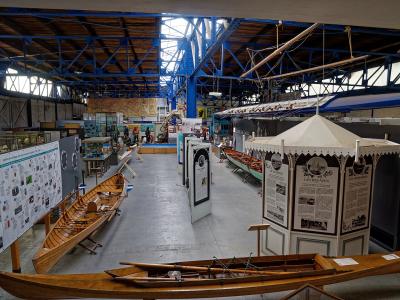
Musée Maritime, Fluvial et Portuaire
Historic port museum with 2,000+ ship models
Harbors · History Museums
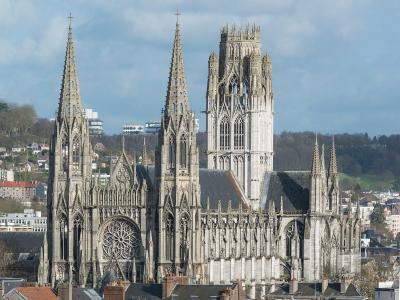
Église Saint-Ouen
14th-century stained glass and Cavaillé-Coll organ
Architectural Landmarks · Churches
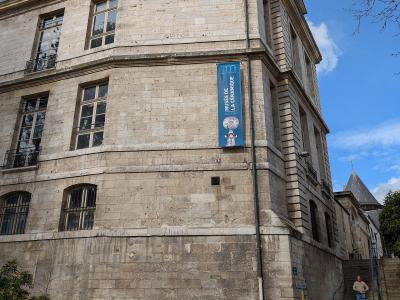
Musée de la Céramique
17th-century palace housing France's largest Rouen earthe...
Historic Architecture · Museums & Culture
Questions people ask
Quick Facts
Best Time to Visit
Late June to early September offers warm weather and ideal conditions for outdoor activities and sightseeing.