







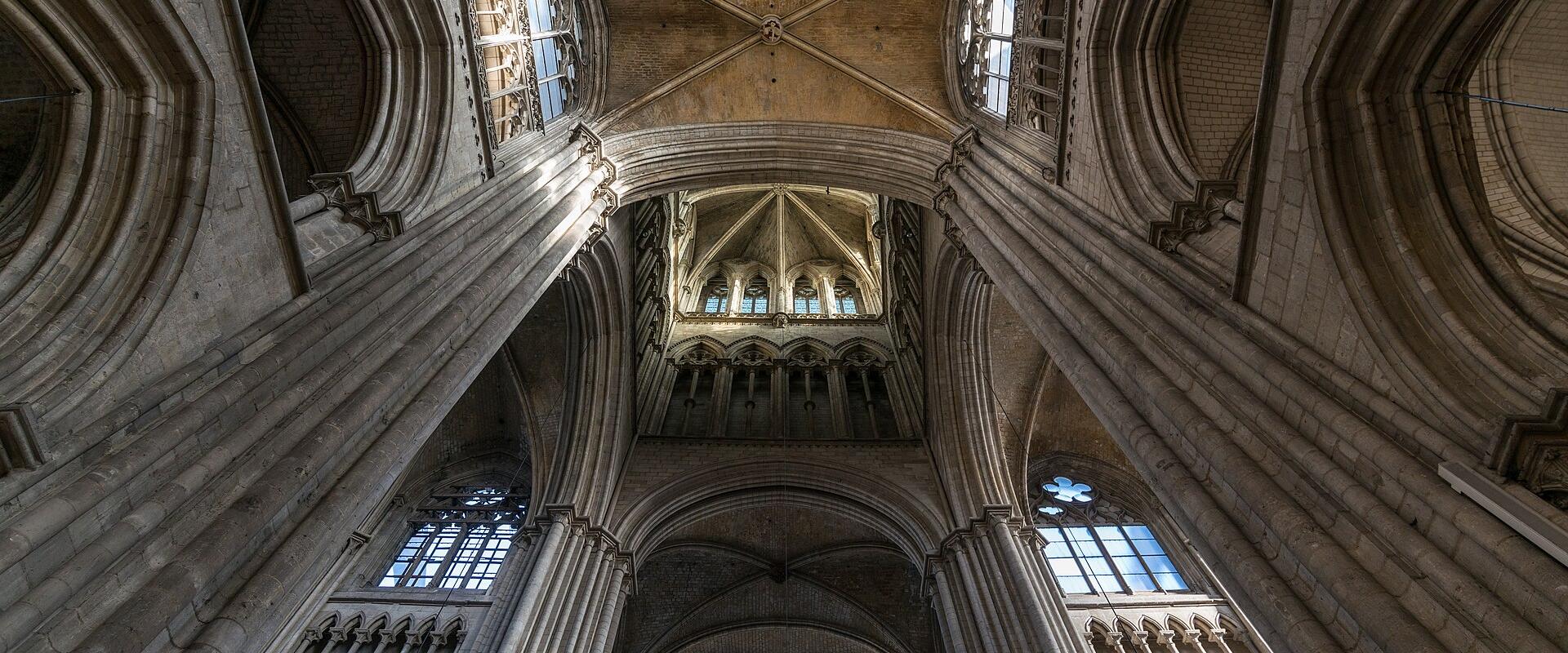
Rouen Cathedral (Cathédrale Notre-Dame de Rouen)
France's widest Gothic facade and world's tallest spire
- Where
- Rouen, Normandy
- Directions
- Directions
Rouen Cathedral is a masterpiece of Gothic architecture, and it is the church that Claude Monet made famous by painting its west front more than thirty times in the early 1890s, in different weather and at different times of day. The façade is the widest of any Gothic cathedral in France, around sixty metres across, and it is covered in sculpture, with gables, pinnacles and tracery of great intricacy, so that the stone seems to dissolve in the changing light. Monet worked from rented rooms opposite the front, and his canvases show the same wall in grey morning mist, in the full midday sun and in the red of sunset.
The cathedral is the work of many centuries, and it shows the evolution of the Gothic style. The oldest surviving part is the Saint-Romain tower, on the left of the façade, which dates from the twelfth century. The main body of the church was rebuilt in the thirteenth century after a fire, in the early Gothic style, and the tall nave and choir follow from that. The portals, with their carved figures, date from the fourteenth century. On the right of the façade stands the Tour de Beurre, the Butter Tower, built from the late fifteenth century in the Flamboyant style, with money raised, according to tradition, from payments made by people who wished to be allowed to eat butter during Lent. At the centre rises the spire, made of cast iron in the nineteenth century, which reaches about 151 metres and is the tallest cathedral spire in France. It was completed in 1876 and, for a few years until the 1880s, made Rouen Cathedral the tallest building in the world.
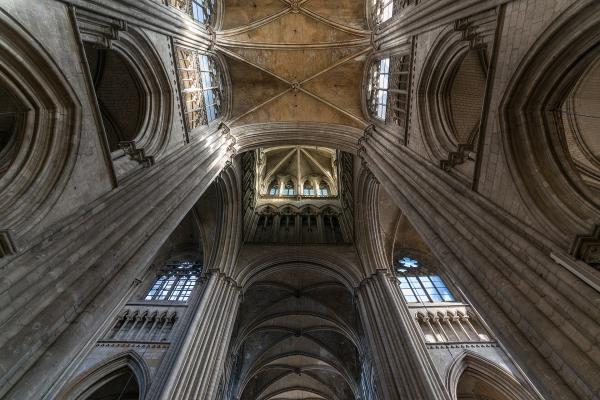
Inside the church, the nave leads to the choir, where the tombs of the dukes of Normandy are found. Rollo, the Viking leader who became the first duke of Normandy, is buried here, and the cathedral has the tomb effigy of Richard the Lionheart, whose heart was buried in Rouen according to his wishes. The stained glass includes some medieval windows, and the cathedral also has carved choir stalls, a flamboyant staircase leading to the library and a crypt. The archbishop's palace remains next to the cathedral, which is unusual in France. The church suffered severe damage in the bombing of 1944, and much of the restoration work was done after the war.
Guided tours explain the history and the details of the sculpture, and in summer evenings a large light show is projected on the façade, which recalls Monet's studies of light. Opening hours differ by day and by season, with longer hours on weekdays and restrictions on Sunday mornings for services, so check before arriving. Entrance to the cathedral itself is free.
The cathedral is a short walk from the Rue du Gros-Horloge, the Place du Vieux-Marché, the Palais de Justice and the Église Saint-Ouen. The Musée des Beaux-Arts, which holds a good collection of Impressionist paintings, is also nearby. A visit takes about an hour.
Categories
More photos coming soon
Nearby Attractions
Other places to visit in Rouen
Musée des Beaux-Arts de Rouen
15th-century art, Impressionist masterpieces, and Caravaggio
Free Museums & Culture · Art Museums
Musée Maritime, Fluvial et Portuaire
Historic port museum with 2,000+ ship models
Harbors · History Museums
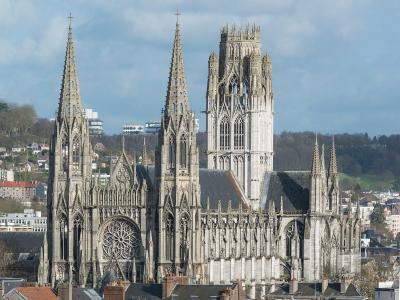
Église Saint-Ouen
14th-century stained glass and Cavaillé-Coll organ
Architectural Landmarks · Churches
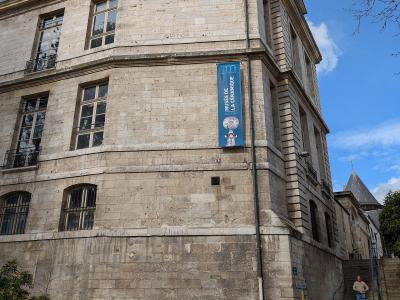
Musée de la Céramique
17th-century palace housing France's largest Rouen earthe...
Historic Architecture · Museums & Culture
Questions people ask
Quick Facts
Best Time to Visit
Late June to early September offers warm weather and ideal conditions for outdoor activities and sightseeing.