







- Where
- Rouen, Normandy
- Directions
- Directions
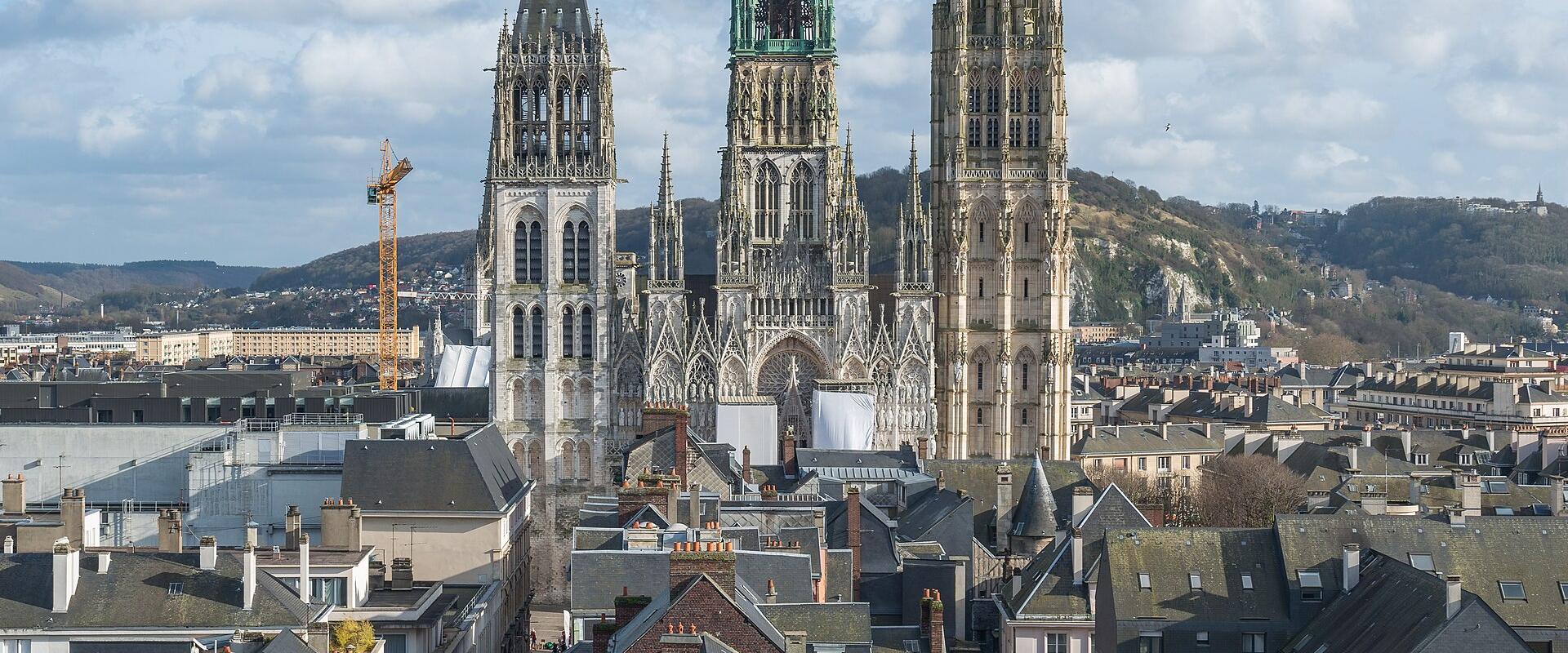
The Rue du Gros-Horloge is the pedestrian street that runs from the cathedral toward the Place du Vieux-Marché in Rouen, and it takes its name from the great clock that spans it on a Renaissance arch. It is the most visited street in the old town and a fine example of how a Norman city looked in the Middle Ages. Rouen has around two thousand half-timbered houses, more than almost any other French city, and many of them line this street and the lanes that run off it, with their upper floors leaning out over the pavement, their beams carved and painted, and their roofs of slate.
The Gros-Horloge itself is a fourteenth-century clock mechanism, one of the oldest in France, which was installed in the belfry in the 1380s and moved in 1527 to its present position on the arch, a stone gateway designed in the Renaissance style that straddles the street. The clock has a large golden dial about two and a half metres across, decorated with a sun and a single hour hand, and it is carved on both sides of the arch, so that people can read it from either direction. Below it is a sculpture of a lamb, the Agnus Dei, the symbol of Rouen's coat of arms. The dial shows the hours, and a small window shows the phases of the moon and the day of the week, with a figure for each day. The belfry rises above the arch, and the arch also links the belfry to the old town hall, a building with a long façade, and together they form a civic group of great charm.
In the high season, the clock mechanism can be visited, usually from April to the end of September, on most days of the week in the morning. You climb the stairs inside the arch to see the wheels and weights of the machine, and then continue up to a viewing platform in the belfry. From the top you look over the roofs of Rouen, with the spires of the cathedral, the church of Saint-Maclou and the river Seine beyond, a rewarding view for a modest effort. Last entry is before midday, and the hours vary, so check them before you go.
The street is lined with shops, cafés and restaurants, with an easy rhythm that makes it a good place to walk. It is busiest in the middle of the day, so the early morning is the best time for photographs and for a quiet look at the details of the woodwork. It is a short walk to the Cathédrale Notre-Dame de Rouen, which Monet painted in his famous series, to the Place du Vieux-Marché, where Joan of Arc was burned, and to the Palais de Justice and the Église Saint-Ouen. The Musée des Beaux-Arts, the Musée de la Céramique and the Musée de la Mode et du Textile are a little farther away.
The street is free and always open. It suits history lovers, photographers and anyone who enjoys wandering through an old town.
More photos coming soon
Nearby Attractions
Other places to visit in Rouen
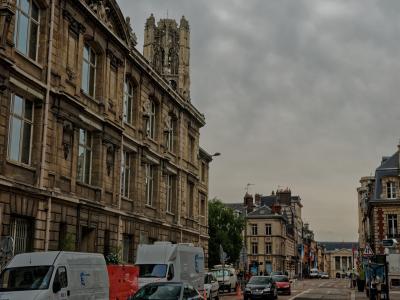
Musée des Beaux-Arts de Rouen
15th-century art, Impressionist masterpieces, and Caravaggio
Free Museums & Culture · Art Museums
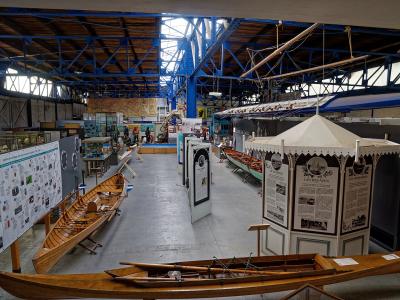
Musée Maritime, Fluvial et Portuaire
Historic port museum with 2,000+ ship models
Harbors · History Museums
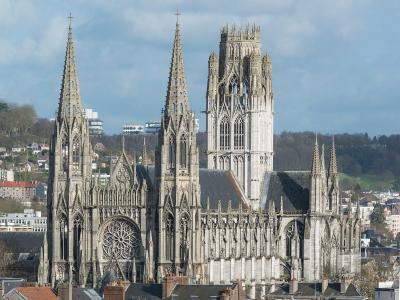
Église Saint-Ouen
14th-century stained glass and Cavaillé-Coll organ
Architectural Landmarks · Churches
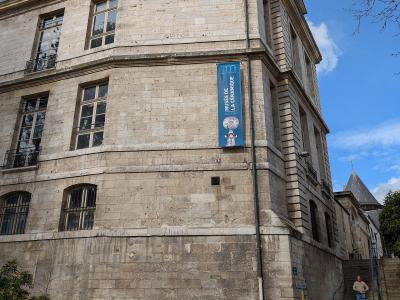
Musée de la Céramique
17th-century palace housing France's largest Rouen earthe...
Historic Architecture · Museums & Culture
Questions people ask
Quick Facts
Best Time to Visit
Late June to early September offers warm weather and ideal conditions for outdoor activities and sightseeing.