The Route in Brief
The Route des Grands Crus is a signposted tourist route through the Côte d'Or, the narrow limestone escarpment that produces most of Burgundy's best-known wines. It runs for about 60 km from Dijon in the north to Santenay in the south, passing through a chain of wine villages. The northern half, the Côte de Nuits, is mainly known for red wines from Pinot Noir; the southern half, the Côte de Beaune, produces both reds and some of the world's most famous whites from Chardonnay.
The individual vineyard plots, called Climats, were inscribed on the UNESCO World Heritage List in 2015. Three days is enough to drive the whole route at a relaxed pace, with time for tastings and walks.
Day 1: Dijon and the Côte de Nuits
Spend the morning in Dijon, the former capital of the Dukes of Burgundy. The Palace of the Dukes houses the Musée des Beaux-Arts, which is free, and the Cité Internationale de la Gastronomie et du Vin, opened in 2022, covers French food and wine.
In the afternoon, head south on the D122, the Route des Grands Crus itself. Marsannay is known for its rosé, Fixin for its quiet village and park, and Gevrey-Chambertin for its concentration of Grand Cru vineyards. Continue through Morey-Saint-Denis and Chambolle-Musigny, where small roads climb between walled vineyards. Stay overnight in Gevrey-Chambertin, Nuits-Saint-Georges or Beaune.
Day 2: Clos de Vougeot, Vosne-Romanée and Beaune
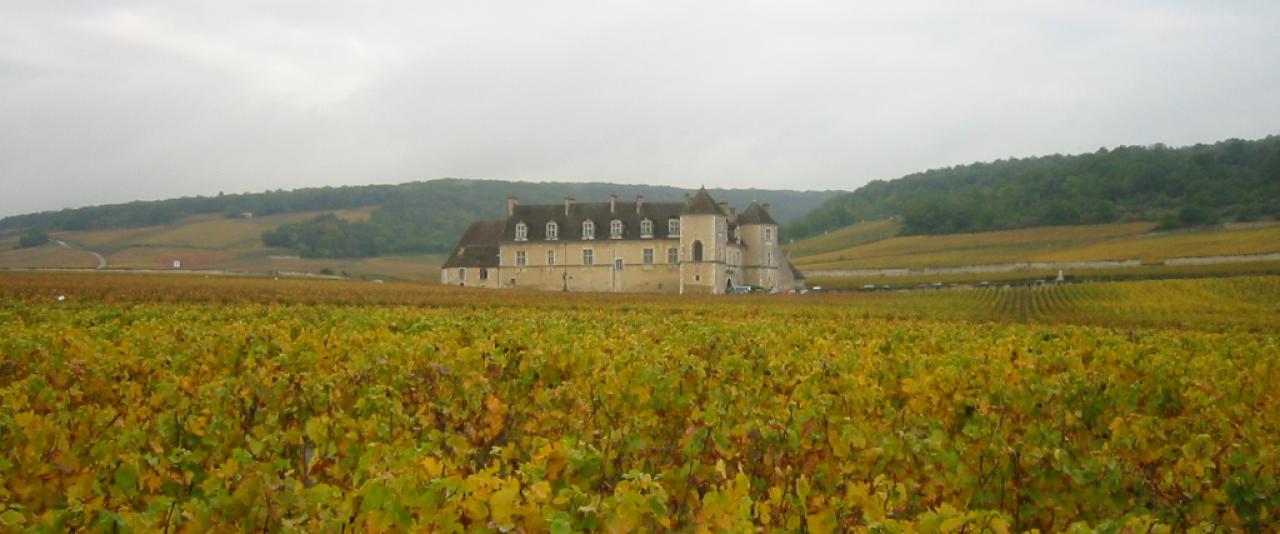
Start at the Château du Clos de Vougeot, set in a walled vineyard first planted by the monks of Cîteaux Abbey. The château is open to visitors and displays large historic wine presses. It is also the home of the Confrérie des Chevaliers du Tastevin.
From Vougeot, the road passes Vosne-Romanée, whose Grand Cru vineyards include Romanée-Conti. There is little to visit there beyond the stone cross and the vines themselves, but the walk among the most valuable vineyards in Burgundy is free. Stay on the paths and tracks between the plots, do not walk into the rows of vines, and never pick grapes: these are working vineyards on some of the most valuable farmland in the world. Nuits-Saint-Georges, a small town with shops and cafés, makes a good lunch stop.
Spend the afternoon in Beaune: visit the Hôtel-Dieu, the 15th-century hospital known for its glazed-tile roofs, then book a cellar tour with one of the négociant houses in town.
Day 3: The Côte de Beaune
South of Beaune, the slope runs through some of the most famous white-wine villages in the world. Pommard and Volnay are known for reds. Meursault is a larger village with several estates and wine shops. Puligny-Montrachet and Chassagne-Montrachet share the Grand Cru of Montrachet, which you can see from the road. End in Santenay, at the southern tip of the Côte d'Or.
If you prefer two wheels, the Voie des Vignes cycle path runs from Beaune towards Santenay through vineyards and villages. It is mostly on quiet lanes and dedicated paths, and bikes and e-bikes can be rented in Beaune.
Tasting Etiquette and Appointments
- Book ahead. Most family domaines receive visitors by appointment only, and many of the most famous ones do not receive the public at all.
- Use caves and négociants. Wine shops, village tasting rooms and larger merchant houses are the easiest way to taste several wines without appointments.
- Spit. It is normal and expected, especially for drivers. The French limit for drivers is 0.5 g of alcohol per litre of blood.
- Lunch hours. Many estates and shops close between about noon and 2 pm.
Practical Notes
- Getting around: a car is the most flexible option. Regional trains on the Dijon to Lyon line stop at several villages, including Gevrey-Chambertin, Vougeot, Nuits-Saint-Georges, Beaune and Meursault, so a car-free trip is possible with some walking or cycling.
- When to go: May, June and September offer good conditions. Estates are busy during the harvest, usually from late August to late September. The third weekend of November brings the Hospices de Beaune auction and crowds.
- Buying wine: prices vary hugely between appellations. Burgundy's hierarchy runs from regional Bourgogne wines through village wines and Premier Cru to Grand Cru, and the name on the label tells you which level you are buying. Village-level and regional wines from good producers offer a realistic way to taste the style without Grand Cru prices.